

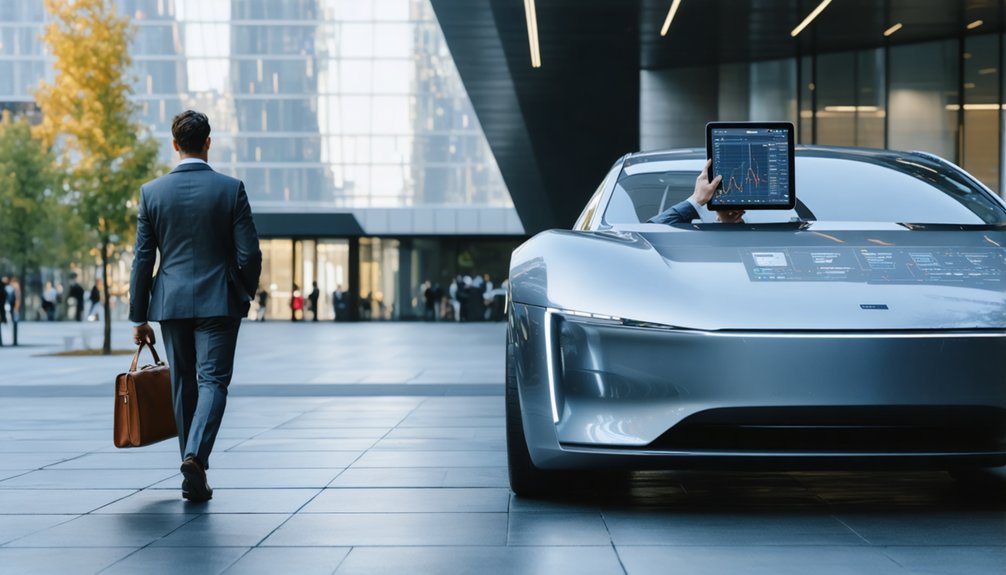
Borrowers exploring electric vehicle financing options can choose from various loans and leases. Green auto loans offer lower interest rates and fee waivers. Credit unions and online lenders provide competitive rates and flexible terms. Captive finance arms also deliver attractive offers. Further exploration of these options can reveal more benefits and incentives to make electric vehicle ownership more affordable and accessible.
Understanding Electric Vehicle Financing Options
Several key factors comprise the process of understanding electric vehicle financing options. EV depreciation and battery leasing are essential considerations. Buyers should be aware that EVs may depreciate faster than traditional vehicles. Battery leasing can provide a cost-effective option, allowing owners to upgrade to newer technology. Financing options, such as loans and leases, are available through various lenders. Understanding these factors helps borrowers make informed decisions when exploring electric vehicle financing options, ultimately finding a solution that suits their needs and budget, and joining a community of like-minded individuals who value sustainable transportation. New EVs often have a higher upfront cost, with a price difference of around $9,000 compared to comparable gas cars. Many borrowers also consider green auto loans, which may offer lower interest rates and longer repayment terms, making electric vehicle financing more accessible to a wider range of buyers. The lease terms and conditions should be carefully evaluated to determine the best financing option for each individual, taking into account their specific needs and circumstances.
How To Choose The Right Lender For Your Ev
Many borrowers find that choosing the right lender for their electric vehicle is a crucial step in the financing process. They consider factors such as credit score, debt-to-income ratio, and lender types.
Credit unions and online lenders offer competitive rates and green auto loans. Some lenders also provide battery leasing and subscription models, catering to diverse EV ownership needs.
Borrowers can prequalify online and compare quotes from multiple lenders to find the best fit. By doing so, they can secure favorable terms and rates, making their EV purchase more affordable and sustainable. This informed approach helps borrowers make a smart financing decision. Many lenders now offer green loans with discounted interest rates, which can lead to significant savings over the life of the loan.
With the availability of 0% APR financing options, such as the zero-interest loans for 72 months, borrowers can explore various financing options to find the one that suits their needs, allowing them to make an informed decision about their electric vehicle purchase. Borrowers should also consider the regenerative braking system’s impact on the overall cost of ownership, as it can lead to significant savings on maintenance and energy consumption.
What Are The Benefits Of Green Auto Loans
Borrowers who have selected a suitable lender for their electric vehicle can now examine the advantages of green auto loans, which offer a range of benefits that make eco-friendly car purchases more affordable and sustainable.
Green credit options provide lower interest rates, extended repayment terms, and cost savings. This incentivizes the purchase of eco-friendly vehicles, reducing emissions tax and promoting a cleaner environment.
With benefits like 100% financing and lower monthly payments, green auto loans make electric vehicles more accessible, supporting a shift to lower-emission transportation and rewarding borrowers for their environmentally conscious choice.
The use of green auto loans has become increasingly popular, as they offer a discounted APR rate, often ranging from 0.25% to 1.00% off the standard auto loan rate, making electric vehicles a more viable option for many borrowers.
Many lenders are now offering green auto loans with special perks, such as fee waivers, to encourage borrowers to choose environmentally friendly vehicles, which can help reduce the country’s overall carbon footprint.
The online application process for green auto loans is also streamlined, allowing borrowers to initiate their ownership journey from home with the help of online tools and resources, making it easier to find the right loan for their new electric or hybrid vehicle.
Exploring Captive Finance Arms And Their Offers
As electric vehicle sales continue to gain momentum, captive finance arms are playing a crucial role in making these eco‑friendly vehicles more accessible to a wider audience. They offer lower financing costs, faster loan approvals, and customized loan terms. Captive finance arms are shaping market trends and influencing financing‑policy impacts. With specialized EV financing options, they cater to the unique needs of electric vehicle buyers. The use of captive finance enables OEMs to align financing with their sales objectives, providing a range of benefits to customers, including lower interest rates and speedier approvals. Volvo’s establishment of its own captive finance arm, with headquarters in Rockleigh, New Jersey, is an example of how companies are investing in financial services to support their customers and dealers. Many borrowers prefer to work with captive lenders because they often offer better interest rates and more flexible repayment terms, making electric vehicles a more affordable option for a wider range of buyers.
Why Credit Unions Are A Top Choice For Ev Buyers
What sets credit unions apart as a preferred financing option for electric vehicle buyers is their unique blend of lower interest rates, flexible loan terms, and personalized service. This not-for-profit model, rooted in community ownership, allows credit unions to offer competitive rates and member-focused incentives. Credit unions often provide an EV discount of 0.25-1.00 percentage points, making their loan rates even more attractive to EV buyers. Member loyalty incentives and a commitment to community ownership nurture a sense of belonging among members. With lower interest rates and flexible loan terms, credit unions provide an attractive alternative to traditional banks, making them a top choice for EV buyers seeking affordable and personalized financing solutions. Credit unions also offer specialized green loan programs that cater to the needs of electric vehicle buyers, providing reduced rates and extended loan terms for eco-friendly vehicles. The integration of embedded financing models enables credit unions to secure a larger market share by providing seamless financing experiences to their members.
How To Get Pre-Approved For An Ev Loan
Electric vehicle buyers who have identified credit unions as a top financing option can take the next step by getting pre-approved for an EV loan.
They can research lenders offering EV lease buyback and battery warranty financing.
To get pre-approved, they gather required documents and submit an application.
The lender reviews credit score and report, and may use a hard or soft credit inquiry.
Upon approval, buyers receive a loan check, which can be used to purchase an EV, and can negotiate terms like down payment and term length, making the buying process smoother and more affordable.
What To Consider When Comparing Ev Loan Terms
When evaluating financing options for an electric vehicle, borrowers must carefully consider the terms of their loan to guarantee they secure the most favorable agreement. They should examine repayment strategies and incentive timing to minimize costs.
Borrowers should also compare interest rates, loan terms, and annual percentage rates among lenders. By doing so, they can make informed decisions and choose the most suitable loan for their needs.
Effective comparison of loan terms enables borrowers to optimize their financing options and ensure a smooth ownership experience for their electric vehicle. This careful evaluation is essential.
Leasing Vs Financing: Which Is Right For You?
Borrowers contemplating the acquisition of an electric vehicle are inevitably faced with a pivotal decision: whether to lease or finance their new vehicle. The lease vs ownership debate hinges on individual priorities.
Leasing offers lower upfront costs, but may impact tax credit eligibility.
In contrast, financing allows borrowers to build equity and claim federal tax credits up to $7,500. Understanding the trade-offs is essential in making an informed decision.
How To Take Advantage Of Special Ev Financing Programs
Many automobile manufacturers now offer special financing programs for their electric vehicle models, providing attractive options for those in the market for a new car.
To take advantage of these programs, borrowers should check their credit-score to determine eligibility. A good state score can also increase chances of approval.
With 47 electric vehicle models featuring special financing rates, borrowers can investigate options like 0% APR for 72 months.
What You Need To Know About Ev Loan Interest Rates
Electric vehicle loan interest rates carry a notable premium, with EV loans averaging 0.29 percentage points higher than non‑EV loans, resulting in a 6.5% average rate compared to the 4.5% average for traditional vehicles.
This increased rate may be attributed to factors such as battery depreciation and charging infrastructure costs.
As a result, borrowers should be aware of these added expenses when exploring financing options.
By understanding these rates, individuals can make informed decisions about their EV purchase, considering the overall cost of ownership and the potential impact on their financial situation.
Rates vary by lender and credit score.
How To Use Tax Credits And Incentives To Save Money
Understanding the total cost of electric vehicle ownership involves more than just considering loan interest rates.
To save money, buyers can use tax credits and incentives.
A tax credit of up to $7,500 was previously available, but has now expired.
However, state and local incentives, such as rebates, still exist.
Rebate eligibility varies by location and income.
Buyers can also claim a rebate tax credit for home EV charger installation, with a 30% credit up to $1,000.
Verifying rebate eligibility and tax credit options is essential to maximizing savings.
Tips For Finding The Best Ev Financing Deal For Your Budget
Borrowers seeking to finance an electric vehicle can traverse the complex terrain of financing options by considering several key factors.
To achieve budget optimization, they should compare current deals, such as 0% APR offers on models like the 2026 Hyundai IONIQ 5.
Additionally, exploring dealer discounts and incentives can lead to significant savings.
By assessing these options, borrowers can make informed decisions that align with their financial goals, ultimately finding the best EV financing deal for their budget and taking advantage of available savings opportunities.
This approach enables borrowers to make a smart investment.
References
- https://recharged.com/articles/best-banks-for-electric-car-loans
- https://www.federalreserve.gov/econres/feds/auto-finance-in-the-electric-vehicle-transition.htm
- https://www.ourcuonline.org/blogs?blog_id=301
- https://promotions.bankofamerica.com/autoloans/electricvehicleresources/shopandfinance
- https://www.gmfinancial.com/en-us/financial-resources/articles/electric-vehicle-auto-financing-guide.html
- https://tenet.com
- https://www.nerdwallet.com/auto-loans/learn/ev-buying-guide
- https://www.cleanenergycu.org/personal/clean-energy-vehicle-loans/
- https://defisolutions.com/defi-insight/electric-vehicle-lending-the-lifespan-of-the-vehicle-vs-the-lifespan-of-the-loan/
- https://www.bankrate.com/loans/auto-loans/green-auto-loans/