

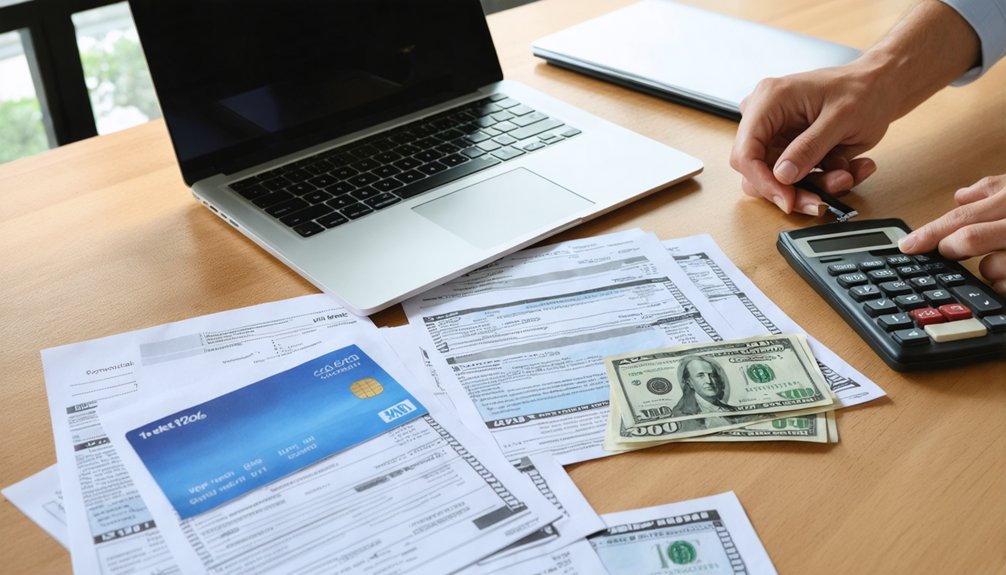
Bill pay loans are fixed-installment loans often repaid through a utility bill, making them more predictable than payday loans, credit cards, or lines of credit. They generally cost less than payday loans and avoid revolving utilization risk from credit cards. However, they may be less flexible than personal loans and are usually tied to specific utility-related purchases. For borrowers who need speed, structure, and manageable payments, they can be a practical option. The distinctions become clearer with a closer comparison.
What Is a Bill Pay Loan?
This energy financing structure is designed for homeowners, businesses, public entities, and nonprofits seeking practical clean energy upgrades.
Programs vary by local rules, customer needs, and sponsor support, but the repayment mechanism remains tied to the utility account. This can offer time savings by simplifying how participants manage and submit payments. Like bank bill pay, it can support organized bill management by keeping payments tied to a familiar account channel.
A utility partnership often handles marketing, administration, and collection, helping participants access improvements through a familiar payment channel rather than traditional standalone lending products. In many programs, the loan is connected to the customer’s utility account, with the borrower remaining responsible for repayment.
When Do Bill Pay Loans Make Sense?
Bill pay loans tend to make the most sense when speed, access, and payment predictability matter more than securing the lowest possible borrowing cost.
They can help during emergencies, especially when bills are due, savings are unavailable, and traditional lenders decline applicants with damaged credit.
They may also fit households managing tight cash flow through fixed installment payments, autopay scheduling, and repayment terms that support more consistent budgeting.
For some borrowers, on-time payments can contribute to credit repair. Installment loans can also offer fixed payments, which may make monthly expenses easier to plan for during a financial shortfall.
flow, credit repair by adding positive history and reducing missed bills.
These loans are generally most appropriate for short-term needs when quick funding and no collateral are priorities. Unlike many BNPL services, some installment loans may support credit building when lenders report payments to credit bureaus. By comparison, BNPL can become costly if missed payments trigger high interest or late fees.
Even so, they only make sense when the payment fits the budget, account balances are monitored, and the higher total cost does not create longer-term financial strain.
Bill Pay Loans vs. Payday Loans
Although both products are used to cover urgent expenses, bill pay loans generally offer a safer and more structured alternative than payday loans.
Payday loans commonly carry fees of $10 to $30 per $100 borrowed, translating into APRs above 300% and sometimes over 600%, while Bill pay loans through banks or Alternative lenders usually offer lower rates and fixed installments. Because of their single-payment structure, payday loans are often due in one lump sum by the borrower’s next paycheck. They also typically require proof of income, a checking account, and ID for approval, despite often involving no credit check.
Repayment structure is another key difference. Payday loans often require full repayment within two to four weeks, which can trigger rollovers, overdrafts, and repeat borrowing. Personal loans also usually include fixed monthly payments, which can make budgeting more predictable over time.
Bill pay loans more often spread payments over months or years, making obligations easier to manage within a household budget.
The Credit score impact may also differ: responsible repayment on Bill pay loans can support financial stability, whereas payday borrowing more often reflects short-term distress than long-term progress.
Bill Pay Loans vs. Credit Cards
Compared with payday loans, the comparison between bill pay loans and credit cards centers less on emergency access and more on cost, structure, and repayment control.
Bill pay loans generally provide fixed payments and clearer payoff timelines, while credit cards rely on revolving balances, variable APRs, and minimum payments that can extend debt for years. Credit cards also tend to carry a higher average APR than personal loans when balances are not paid in full. Balance-transfer cards may offer a temporary 0% APR period, though they often charge transfer fees and require disciplined repayment before the promotional rate expires.
For households seeking steadier budgeting within trusted financial routines, credit cards offer flexibility, rewards, and short-term grace periods when balances are paid in full. However, unpaid balances often carry higher rates, and heavy credit utilization can weaken credit standing. Keeping balances below the 30% utilization threshold can help protect credit scores.
Bill pay loans may start repayment immediately, yet they can support more predictable progress.
Borrowers evaluating cash repayment‑impact options should compare fees, payment certainty, and the risk of ongoing card borrowing before choosing either option carefully.
Bill Pay Loans vs. Personal Loans
When borrowers weigh bill pay loans against personal loans, the main distinction lies in how the money is structured and used. Bill pay loans are tied to specific purchases, while personal loans provide a lump sum that can cover many needs. Because personal loans deliver funds in one-time lump sum, they tend to work best for fixed, one-off expenses rather than ongoing borrowing needs.
Personal loans usually carry fixed monthly payments and terms of two to seven years, sometimes longer, which can support predictable budgeting and stronger repayment flexibility. They may also include origination fees that are deducted from the loan proceeds. Unlike payday loans, personal loans are more likely to build credit through regular reporting to credit bureaus.
Personal loans also involve formal underwriting. Lenders review income, employment, and credit scoring before approving amounts that may range from $1,000 to $100,000. Funding often arrives within days, though some online lenders move faster. Rates generally stay below 36% APR, with costs shaped by creditworthiness and possible fees.
For borrowers seeking broader use and stable payments, personal loans often offer a more structured path overall.
Bill Pay Loans vs. Lines of Credit
How bill pay loans differ from lines of credit comes down to structure, access, and repayment.
A bill pay loan typically delivers a lump sum upfront and follows fixed installment terms.
A line of credit, including flex credit, is revolving, letting funds be drawn as needed during a draw period without reapplying. That makes it better suited to expenses that change over time.
Costs and payments also differ.
Bill pay loans often carry fixed rates and equal monthly payments, which support predictable budgeting and community-minded financial routines.
Lines of credit usually have variable rates, interest charged only on amounts used, and possible annual or transaction fees.
In a fee comparison, lines of credit can cost less when only part of the limit is used, while loans provide stronger payment certainty and less repayment flexibility overall.
Bill Pay Loans vs. Bad Credit Loans
Although the two categories often overlap, bill pay loans and bad credit loans are not always identical. Bill pay loans describe a use case—covering urgent household obligations—while bad credit loans describe underwriting aimed at borrowers with damaged or limited credit histories. Both may rely on income eligibility and overall repayment ability more than credit score alone.
Bad credit loans are generally accessible to applicants traditional lenders decline, including some with scores in the upper 500s or lower, and approval may arrive within 24 hours. Bill pay loans can come from those same lenders, but not every bill pay product is specifically marketed as a bad credit loan. Borrowers typically see smaller loan amounts and varying repayment flexibility, from short terms to several years. On-time payments may support credit improvement over time.
How Rates and Fees Compare
Rates and fees often determine whether a bill pay loan is manageable or unnecessarily expensive. Personal loans commonly carry APRs from 6% to 36%, with stronger credit typically receiving lower costs. A fee comparison should examine both interest and upfront charges, since origination fees often range from 1% to 10% and may be deducted from proceeds.
Repayment length also changes total cost. On $10,000 at 12% APR, a two-year term costs about $471 monthly and $1,298 in interest, while five years lowers the payment to $222 but raises interest to $3,347.
Mortgages usually post lower rates, averaging about 6.214% nationally, yet their fee structure can include points, credits, taxes, and insurance. Reviewing APR, monthly payment, and total interest helps borrowers compare options with confidence and choose wisely.
Which Option Offers Easier Approval?
When approval speed and accessibility are the priority, buy now, pay later plans often stand out as the easiest option to obtain. Approval approval rates generally ranged from 73% to 79% between 2021 and 2022, including strong access for subprime borrowers. Soft inquiries and checkout-based applications reduce friction and limit immediate credit impact for many applicants. Counteroffers also help extend access through lower limits or larger down payments.
Payday loans are also widely accessible, often requiring only basic verification and offering fast cash, but their reach reflects emergency borrowing rather than broad affordability. Personal loans typically present the highest barrier because lenders use full applications and stricter underwriting. Compared with payday and personal lending, BNPL appears most approachable for consumers seeking simple, inclusive access to short-term financing without immediate heavy screening.
How to Choose the Right Bill Financing Option
Ease of approval matters, but the right bill financing option depends on a broader review of cost, repayment structure, borrowing limits, and project fit.
On-bill programs can be especially attractive because PG&E and PSE&G offer 0% financing, while Go Green provides below-market rates and larger balances.
Decision-makers should compare eligibility criteria, energy eligibility, repayment length, and total fees before choosing.
PG&E allows up to $400,000 per site with up to 10 years to repay and a 5% energy savings requirement.
PSE&G adds repayment to the utility bill over 60 months, while some state programs offer 2.99% or 0% terms.
Personal loans may provide flexibility but can carry APRs from 6.49% to 35.49% and origination fees above 10%.
Same-day loan estimates help households compare true total cost accurately.
References
- https://wiseloan.com/blog/should-you-consider-a-loan-to-pay-for-bill-payment/
- https://www.americanexpress.com/en-us/business/trends-and-insights/articles/business-line-of-credit-vs-loan-comparing-funding-options/
- https://www.bankrate.com/loans/personal-loans/personal-loan-line-of-credit/
- https://www.wisetack.com/blog/credit-cards-vs-installment-loans
- https://gocolonial.com/personal-loans-vs-credit-cards-whats-best-for-big-expenses/
- https://www.watrust.com/articles/term-loan-vs-line-of-credit-whats-best-for-your-small-business
- https://www.experian.com/blogs/ask-experian/is-it-better-to-finance-purchase-or-pay-cash/
- https://www.epa.gov/statelocalenergy/bill-loan-programs
- https://www.alogent.com/banking-definitions/bill-pay
- https://www.moneycrashers.com/bill-pay-streamline-finances/